
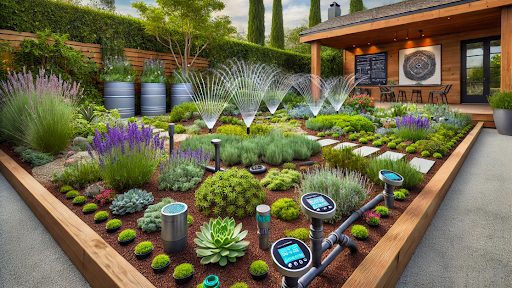
Sustainable gardening is all about conserving natural resources, and water-saving irrigation systems play a critical role in reducing water usage while maintaining a healthy garden. By integrating efficient watering methods, you can create a garden that thrives with less water, making it eco-friendly and cost-effective. For more tips on garden design and efficient irrigation, check out Green Walls in Dublin.
1. Drip Irrigation Systems
Drip irrigation is one of the most effective water-saving systems available for sustainable gardening. This system delivers water directly to the roots of plants through a network of tubes, minimizing evaporation and runoff.
- Water Efficiency: Drip irrigation reduces water waste by slowly applying water where it’s needed most, at the root zone. It’s perfect for flower beds, shrubs, and even vegetable gardens.
- Customizable: You can customize the setup to suit different parts of your garden, ensuring each plant gets the right amount of water.
For customized water-saving garden features, visit Garden Design in Ireland.
2. Rainwater Harvesting
Rainwater harvesting is an eco-friendly way to reduce your garden’s reliance on tap water. Collecting and storing rainwater allows you to use it during dry spells, cutting down on water bills and helping to conserve this valuable resource.
- Rain Barrels: Install rain barrels under your gutter systems to collect runoff from your roof. You can then use this water to irrigate your plants.
- Rain Gardens: These gardens are designed to collect rainwater runoff and allow it to slowly seep into the ground, hydrating plants while reducing the risk of flooding.
3. Smart Irrigation Controllers
Smart irrigation systems take water conservation to the next level by automatically adjusting your watering schedule based on weather conditions, soil moisture, and plant needs. These systems help ensure your garden gets just the right amount of water, even when you’re away.
- Weather Sensors: These controllers use real-time weather data to adjust watering schedules automatically, reducing water waste on rainy days.
- Soil Moisture Sensors: Soil moisture sensors detect how much water your soil needs and adjust irrigation schedules accordingly, ensuring optimal watering.
4. Mulching to Retain Moisture
Adding a layer of organic mulch to your garden helps retain soil moisture by reducing evaporation. Mulch also suppresses weed growth and helps keep your garden healthy with minimal water use.
- Organic Mulch: Use bark, leaves, or compost as mulch to help retain moisture in your garden beds.
- Water Efficiency: Mulch can reduce the need for frequent watering by maintaining consistent soil moisture levels.
5. Xeriscaping for Drought-Resistant Gardens
Xeriscaping is a landscaping method that focuses on drought-tolerant plants and efficient water use. This approach reduces the need for supplemental watering, making it ideal for gardens in arid or water-restricted areas.
- Drought-Tolerant Plants: Choose native, drought-resistant plants like succulents, ornamental grasses, and lavender to create a garden that thrives with minimal water.
- Efficient Design: By strategically grouping plants with similar water needs, you can reduce water consumption and make your irrigation system more efficient.
Conclusion
Incorporating water-saving irrigation systems into your garden helps you achieve sustainable gardening by reducing water waste and promoting plant health. Whether you choose drip irrigation, rainwater harvesting, or smart irrigation systems, these methods allow you to conserve water while maintaining a thriving outdoor space.
Thoughtful planning and design ensure your garden stays lush and beautiful while being kind to the environment.


