
The Origins of the Louvre Museum
The Louvre Museum stands as a monumental testament to French history, culture, and art. Its origins date back to the 12th century, when it was first constructed as a fortress under King Philip II. This initial structure was not the cultural beacon we know today but a strategic military outpost designed to protect Paris. Over the years, as Paris evolved into the heart of France, the fortress was transformed into a royal palace, reflecting the shifting priorities and grandeur of the French monarchy. The Louvre Museum transition from fortification to royal residence marks the beginning of its deep connection to French history.
The Renaissance Transformation of the Louvre
During the Renaissance, the Louvre underwent significant architectural and cultural changes. King Francis I, an ardent supporter of the arts, brought Italian influences to the palace, commissioning architects to redesign it in the Renaissance style. This period also saw the acquisition of the Mona Lisa, one of the Louvre Museum’s most iconic pieces, which exemplifies the cultural ambitions of the French monarchy. The Louvre became not just a symbol of power but also of artistic sophistication. This transformation mirrored France’s growing engagement with the broader European cultural renaissance, embedding the Louvre firmly within the narrative of French enlightenment.
The Louvre’s Role in the Age of Absolutism
The 17th century marked the rise of absolute monarchy in France, and the Louvre reflected this era’s opulence and power. Under Louis XIV, the Louvre was further enhanced, with significant contributions from architects and artists who expanded its galleries and courtyards. However, the Sun King ultimately shifted his court to Versailles, leaving the Louvre as a treasure trove of royal art and antiquities. This era showcased the museum’s growing role as a repository of cultural and historical artifacts, a precursor to its modern function as a museum. The grandeur of the Louvre in this period illustrates the central role of art and architecture in projecting the authority of the French monarchy.
The Louvre During the French Revolution
The French Revolution marked a pivotal turning point for the Louvre Museum. With the fall of the monarchy, the palace was repurposed to serve the public as a national museum. In 1793, the Louvre officially opened its doors, showcasing works confiscated from the royal family and the Church. This transformation symbolized the revolutionary ideals of liberty and equality, making art accessible to all citizens. The Louvre Museum became a representation of a new France, embracing its rich heritage while stepping into a future defined by democratic principles.
The Expansion of the Louvre During the Napoleonic Era
Napoleon Bonaparte played a crucial role in expanding the Louvre Museum’s collections. As France’s empire grew, so did its acquisitions of art and artifacts from across Europe and beyond. Napoleon envisioned the Louvre as a universal museum, a reflection of French dominance and cultural superiority. This period saw the addition of numerous masterpieces, including the Venus de Milo and the Winged Victory of Samothrace. Although some works were returned after Napoleon’s defeat, his contributions permanently elevated the Louvre’s status as a world-class institution. The Napoleonic era underscored the Louvre’s role in showcasing French influence on a global stage.
The Louvre in the 19th and Early 20th Century
The 19th and early 20th centuries were a time of modernization and expansion for the Louvre Museum. As France experienced industrialization and colonial expansion, the museum grew to include artifacts from diverse cultures and historical periods. The Louvre’s collections became more comprehensive, reflecting a broader understanding of world history and art. Major renovations and new wings were added, making the museum more accessible to the public. This era highlighted the Louvre’s dual role as a guardian of French heritage and a window into global cultures, reinforcing its status as a cultural epicenter.
The Modernization of the Louvre
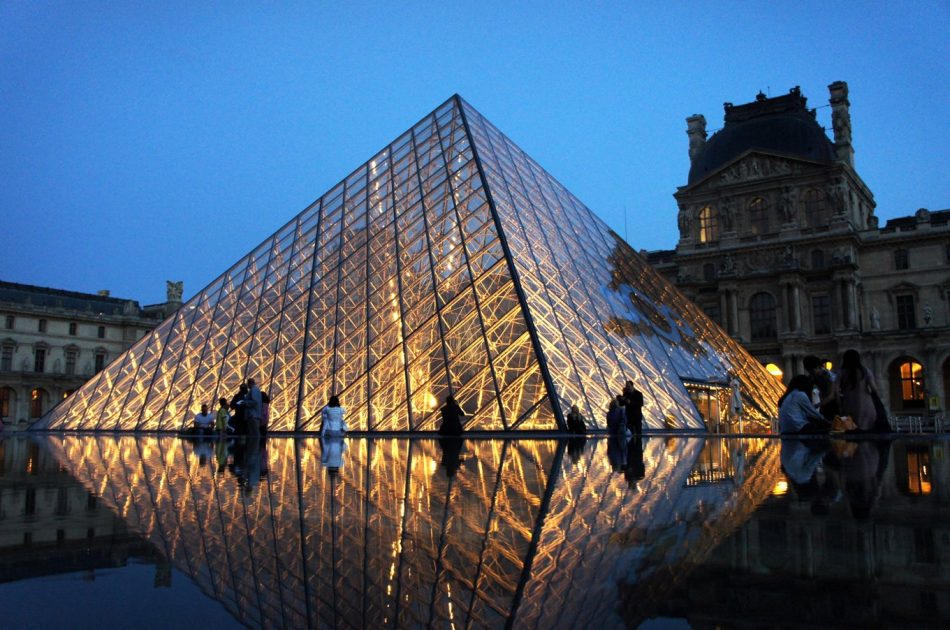
The latter half of the 20th century brought significant changes to the Louvre Museum. The most iconic of these was the addition of the glass pyramid entrance in 1989, designed by architect I. M. Pei. This modern structure blended contemporary design with the museum’s historic architecture, symbolizing the Louvre’s evolution. In this period, the museum also embraced digital advancements, launching online exhibits and virtual tours to reach a global audience. The modernization of the Louvre reflects France’s ability to honor its historical roots while embracing innovation, ensuring its relevance in the modern world.
The Louvre as a Reflection of French Identity
Today, the Louvre Museum stands as a microcosm of French history and identity. Its diverse collections, ranging from ancient artifacts to contemporary art, tell the story of a nation that values its past while looking forward. The museum’s role in preserving and presenting art mirrors France’s cultural priorities and its commitment to sharing its heritage with the world. As visitors walk through the Louvre’s halls, they not only witness the evolution of art but also the unfolding narrative of French society through the ages.
Conclusion
The Louvre Museum is far more than a repository of art; it is a living testament to the history and cultural evolution of France. From its origins as a medieval fortress to its status as a global cultural icon, the Louvre reflects the triumphs, transformations, and complexities of French history. Its ability to adapt and expand while honoring its heritage ensures its place as one of the world’s most treasured institutions. The story of the Louvre is, in many ways, the story of France itself—a tale of resilience, creativity, and an enduring passion for art and culture.


